Paro · Thimphu · Punakha · Sinchula · Phobjikha
A Hidden Himalayan Passage
Paro · Thimphu · Punakha · Sinchula · Phobjikha
This privately curated seven-day journey begins among the cultural landscapes of Paro, Thimphu and Punakha before turning toward the mountains.
Beyond Punakha, roads and larger settlements begin to disappear.
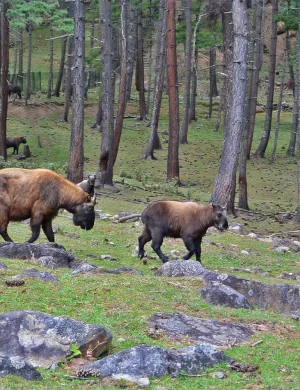
Traditional trails enter deep forest where the pace of travel changes completely. Days are measured by footsteps and changing light rather than distance alone, while mountain viewpoints reveal valleys and distant Himalayan ridges through openings in the trees.
At approximately 3,500 metres, Sinchula Pass forms the natural high point of the journey.
From here, the trail begins its descent toward Phobjikha—a protected valley known for its rural landscapes, spiritual heritage and seasonal association with black-necked cranes.
The result is a compact Himalayan adventure combining trekking, cultural discovery and wilderness without the extended altitude commitment of Bhutan’s longer expeditions.
Festival dates vary each year
Available on request
Ideal journey length
Couples and private travelers
Before entering the forests of Sinchula, the journey begins among Bhutan’s cultural valleys.
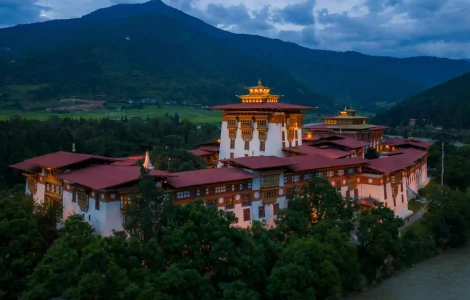
Paro provides the first encounter with the kingdom through ancient temples and fortified architecture before the road follows the river toward Thimphu.
From the capital, the journey crosses Dochula Pass and descends into Punakha—a warmer valley shaped by sacred rivers, cultivated fields and one of Bhutan’s greatest fortresses.
These first two days provide the cultural foundation for the wilderness journey ahead.
After landing, receive a traditional welcome from your private Bhutanese host and begin discovering Paro.
Visit Rinpung Dzong, the imposing fortress overlooking the valley. Walk through its courtyards and galleries while discovering the architectural and spiritual traditions that have shaped Bhutan’s great dzongs.
Continue to Kyichu Lhakhang, one of Bhutan’s oldest and most revered temples.
Within its peaceful courtyards, centuries of devotion continue through prayer, ritual and the turning of prayer wheels.
Later, begin the scenic journey toward Thimphu.
Follow the river through mountain settlements and cultivated landscapes before arriving in Bhutan’s capital.
As evening settles over the valley, enjoy a traditional Bhutanese welcome dinner and meet the specialists who will support your trekking journey.
Tomorrow, the road turns toward Punakha and the gateway to the mountains.

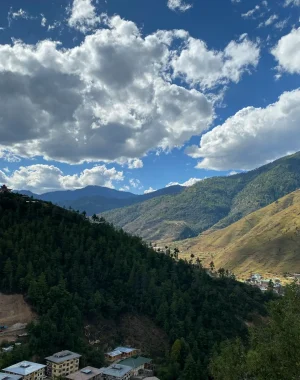
At approximately 3,100 metres, 108 white chortens rise beneath hundreds of colorful prayer flags.
On clear mornings, distant Himalayan peaks stretch across the horizon.
Descend into the warmer Punakha Valley.
Visit Punakha Dzong, dramatically positioned at the confluence of the Pho Chhu and Mo Chhu rivers.
Walk through its monumental courtyards, sacred chambers and carved galleries while discovering the royal and spiritual history associated with the fortress.
Later, follow a gentle countryside path through rice fields and traditional settlements toward Chimi Lhakhang.
Dedicated to Drukpa Kunley, the unconventional Buddhist teacher remembered as the Divine Madman, the temple remains an important place of pilgrimage and blessing.
Spend the evening surrounded by Punakha’s rivers and forested hills.



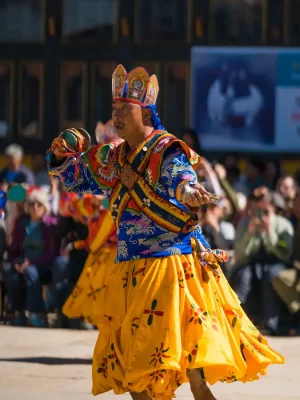
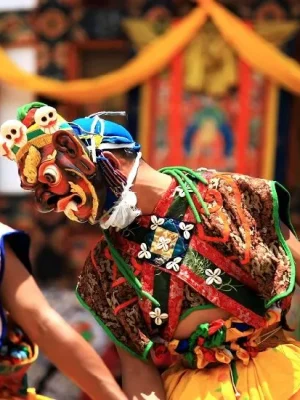
Paro is where Bhutan’s sacred heritage and natural beauty meet.
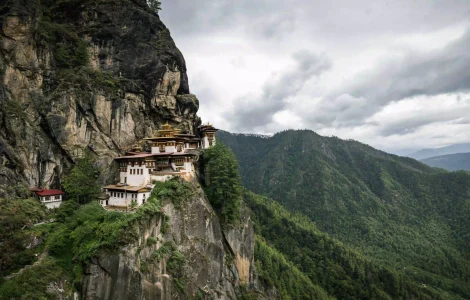
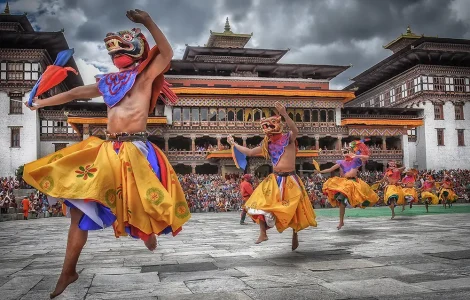
The valley is home to ancient temples, traditional villages and Rinpung Dzong—the spiritual stage of Paro Tsechu. Above it all, Paro Taktsang appears to defy gravity, clinging to a forested cliff high above the valley.
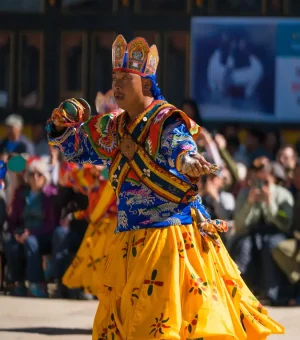
These final three days move from celebration to pilgrimage and, finally, reflection. Together, they reveal why Bhutan is not simply somewhere you visit. It is somewhere you feel.
Leave Punakha and travel toward the beginning of the Sinchula trail.
Meet your trekking team and continue on foot.
The path enters forest almost immediately.
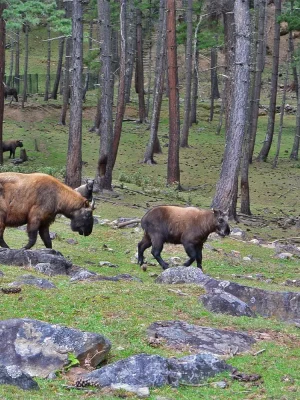
Pine, oak and rhododendron cover the surrounding slopes while streams descend from the mountains and occasional openings reveal the valleys below.
As elevation increases, cultivated landscapes become more distant.
Traditional paths continue deeper into quieter terrain where the rhythm of the journey is determined by the mountain itself.
Walk.
Rest.
Listen.
And continue.
By afternoon, the modern world feels increasingly remote.
Reach your wilderness camp in the Sinchula region and settle among the forested mountains.
As darkness arrives, the sounds of the valley disappear completely.
Tomorrow, the trail climbs toward the pass.
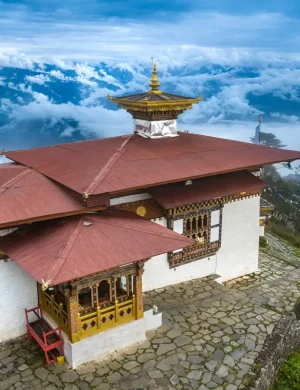
Rise early and begin climbing toward the highest point of the trek.
The trail winds upward through forest before the landscape gradually becomes more open.
Cool mountain air replaces the warmth of the lower valleys.
Prayer flags begin to appear along elevated sections of the route.
Eventually, reach Sinchula Pass at approximately 3,500 metres.
Pause beneath the prayer flags and take in the surrounding landscape.
On clear days, views extend across Bhutan’s valleys and distant mountain ridges while forests spread across the slopes below.
There is no monument here.
The landscape itself is the experience.
Take time to absorb the stillness before beginning the next section of the trail.
Continue through pristine mountain country, moving between forest and more open highland landscapes before reaching camp.
Tonight, the pass lies behind you.
Phobjikha waits beyond the mountains.

Begin descending from the Sinchula highlands.
The trail moves through changing forests as elevation gradually decreases.
Streams follow the mountainsides while occasional settlements begin to appear between cultivated landscapes.
After days of dense forest and remote mountain trails, the return of villages creates a subtle sense of transition.
Continue toward Phobjikha.
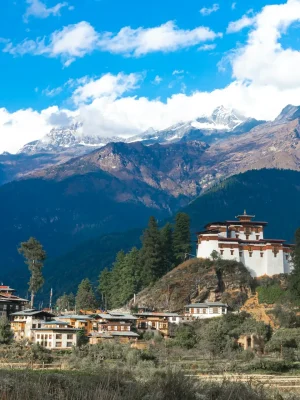
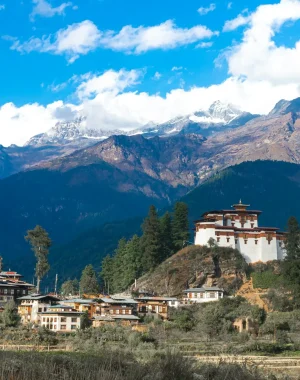
The landscape opens dramatically as the broad glacial valley appears between surrounding mountains.
Traditional farmhouses and fields spread across its floor while forested slopes frame the horizon.
During the colder months, Phobjikha becomes an important seasonal habitat for black-necked cranes migrating from the Tibetan Plateau.
Settle into your carefully selected accommodation and spend the evening experiencing the extraordinary quiet of the valley.

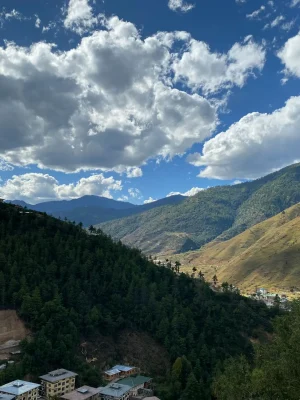
Descending from Sinchula brings another transformation.
The forests gradually open.
Traditional settlements and farmland return.
Eventually, the landscape expands into the broad glacial basin of Phobjikha.
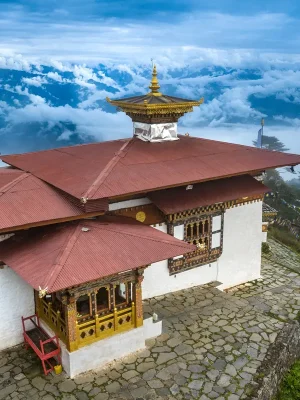
Here, mountain wilderness gives way to a cultural landscape where villages, monasteries and conservation exist side by side.
The journey concludes by returning through Thimphu before reaching Paro—the same valley where the adventure began.
Begin descending from the Sinchula highlands.
The trail moves through changing forests as elevation gradually decreases.
Streams follow the mountainsides while occasional settlements begin to appear between cultivated landscapes.
After days of dense forest and remote mountain trails, the return of villages creates a subtle sense of transition.
Continue toward Phobjikha.
The landscape opens dramatically as the broad glacial valley appears between surrounding mountains.
Traditional farmhouses and fields spread across its floor while forested slopes frame the horizon.
During the colder months, Phobjikha becomes an important seasonal habitat for black-necked cranes migrating from the Tibetan Plateau.
Settle into your carefully selected accommodation and spend the evening experiencing the extraordinary quiet of the valley.
Your final morning begins in Bhutan’s capital.
Visit Buddha Dordenma, the immense golden figure seated high above Thimphu Valley.
From its elevated position, take in sweeping views toward the surrounding mountains.
Continue to traditional craft centres and local markets, where textiles, handmade objects and Bhutanese arts provide a final encounter with the kingdom’s living cultural traditions.
Later, return toward Paro.
Your private transfer will take you to Paro International Airport for your departing flight.
As the aircraft rises above the valley and the mountains return to view, reflect on the journey that has taken you from sacred fortresses and cultivated valleys into deep forests, across a hidden mountain pass and finally into the stillness of Phobjikha.
Sinchula disappears somewhere among the ridges below.
The trail ends.
The quiet of the mountains remains.
Departure from Paro.
Start your bespoke adventure with us
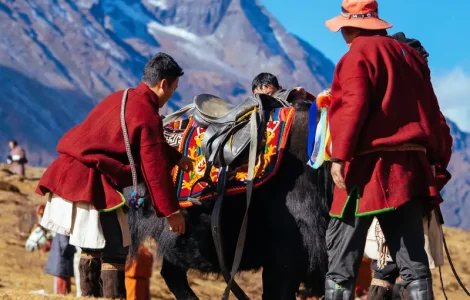
Himalayan wilderness
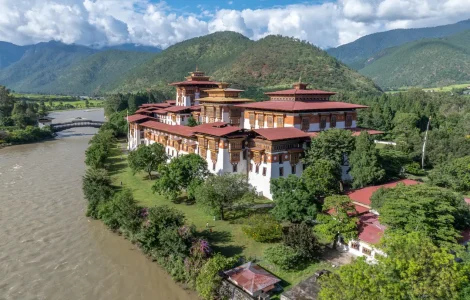
NATURE & CULTURE
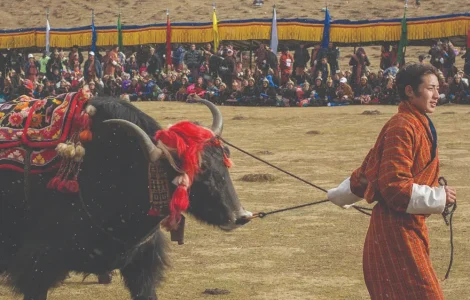
CALTURAL TOUR
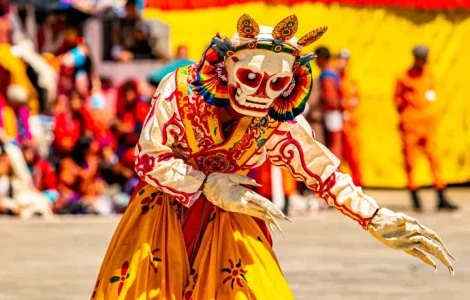
CELEBRATION TOUR
BEST SELLER
Himalayan valleys
LET’S DESIGN YOUR JOURNEY
SD Travel Group is a trusted travel company offering customized Bhutan packages with reliable local expertise.
@2026 SD Travels Group Pvt. Ltd.- All Rights Reserved.
:max_bytes(150000):strip_icc()/GettyImages-133969846-596da35068e1a200112a3e89.jpg)